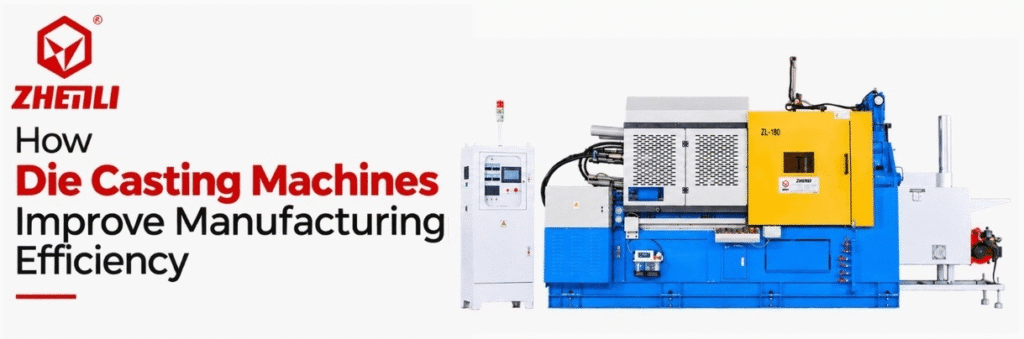
This is where a well-designed die casting machine can make a significant difference.
In manufacturing, efficiency is not simply about producing more parts. It is about producing the right parts, at the right quality, in the right time — while keeping waste, downtime and production costs under control.
For manufacturers working with high-volume metal components, die casting offers a combination of speed, repeatability and precision that can directly impact overall production performance.
1. Faster Production Cycles
Time matters on every production floor.
Modern die casting machines are designed to complete casting cycles quickly and consistently, allowing manufacturers to produce a higher number of components within the same operating time.
When cycle times are optimized, production capacity increases without necessarily requiring additional machines or manpower.
2. Consistent Product Quality
Producing a component once is easy.
Producing thousands of identical components with the same dimensions, finish and performance is where precision really matters.
Die casting machines provide controlled and repeatable operating conditions. This helps manufacturers maintain consistency across production batches and reduce variations that can lead to rejection or rework.
3. Better Material Utilization
Material waste directly affects manufacturing costs.
Die casting allows molten metal to be injected into precisely designed dies, helping manufacturers produce complex components with accurate dimensions and minimal excess material.
Better material utilization means less waste and, ultimately, more efficient use of valuable raw materials.
4. Reduced Manual Intervention
Automation has become an important part of modern manufacturing.
From material handling and component extraction to process monitoring and other production operations, automation can reduce the amount of repetitive manual work involved in die casting.
This not only improves productivity but also allows operators to focus more on process control, quality and other value-added activities.
5. Lower Rejection and Rework
Every rejected component comes with a cost — material, machine time, labour and energy have already been spent producing it.
Stable machine performance and precise process control can help reduce defects and improve first-pass yield. Fewer rejected components mean less rework, less waste and a smoother production flow.
6. Improved Machine Utilization
A machine’s performance is not only measured by its maximum output.
Reliable operation, shorter changeover times, consistent cycles and reduced downtime all contribute to better machine utilization.
For manufacturers, this can translate into greater output from the same production resources.
7. Supporting Scalable Manufacturing
As production requirements grow, manufacturers need machinery that can keep pace.
A reliable die casting solution can help businesses increase production capacity while maintaining the consistency and efficiency required for larger volumes.
The goal is not simply to add more production. It is to build a process that can scale without compromising quality.
Efficiency Starts With the Right Technology
Manufacturing efficiency is the result of many small improvements working together — faster cycles, consistent quality, reduced waste, less downtime and smarter automation.
The die casting machine sits at the heart of this process.
Choosing the right machine, therefore, is not just a machinery investment. It is a decision that can influence productivity, operating costs, product quality and long-term manufacturing performance.
At Zhenli Machinery & Automation, our focus is on developing die casting solutions that help manufacturers move towards more efficient, reliable and productive operations.
Because better machinery should do more than produce components.
It should help your entire production process perform better.